 I have to say, I honestly feel sorry for anyone who’s never had the opportunity to eat a fresh fig. If that’s you, don’t despair, you still might be able to grow your own, even if you’re not in the ideal climate.
Continue reading Fig (Ficus carica)

I have to say, I honestly feel sorry for anyone who’s never had the opportunity to eat a fresh fig. If that’s you, don’t despair, you still might be able to grow your own, even if you’re not in the ideal climate.
Continue reading Fig (Ficus carica)

 Cabbage is one of those “cool weather” crops that has stymied me for a while. Being in zone 9 means that one has to take advantage of the fall season, just when you think you get to take a break from your summer garden, if you want to have success with these kinds of crops.
Continue reading Cabbage (Brassica oleracea)

 You know, a recipe typically calls for 1 to 2 bay leaves. Then you do another dish, and another. Those leaves start to add up. They aren’t cheap. Growing your own is.
Continue reading Laurus nobilis (Grecian Laurel or Sweet Bay)

 I disappeared once when I was about three. My parents frantically searched the house looking for me, only to find me in the garden… eating all the peas.
Continue reading Peas (Pisum sativum)

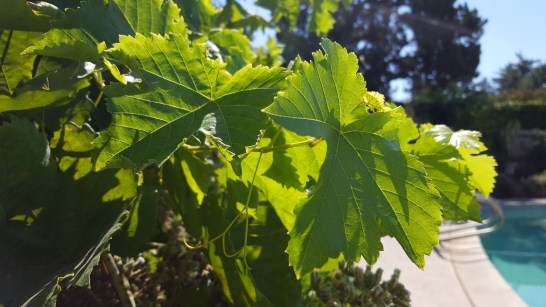 I have come to realize that so many of the foods I was **ahem** “not fond of” were ones that started with less than fresh ingredients. Count dolmades, a Greek delicacy made with grape leaves, as one of them.
Continue reading Harvesting Grape Leaves

 I can’t imagine life without garlic, nor do I think I should have to. That would just be cruel. Thankfully, it’s easy to grow, so I don’t think I’ll have to worry!
Continue reading Garlic (Allium sativum)

 If you drive along some parts of the central California coast, you are likely to see wide swaths of the landscape covered in artichoke plants. In fact, this is pretty much the only place in the U.S. where commercial artichokes are grown.
Continue reading Artichoke (Cynara scolymus)

 When I think of growing blueberries, I think of places like Oregon or Maine. You know, forests and cooler climates. Not 100+ F temperatures in California’s Central Valley zone 9. Yet, here they are!
Continue reading Blueberry (Vaccinium spp.)

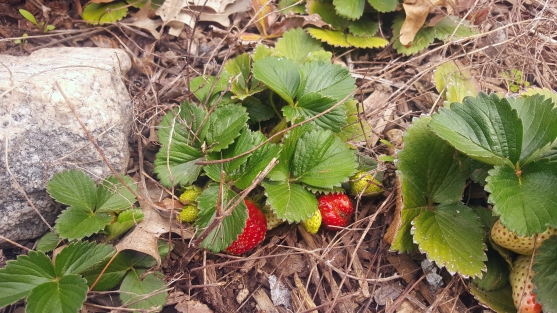 There is a reason most supermarket strawberries don’t taste all that great. They aren’t ripe when they are picked. Fix that problem by growing your own!
Continue reading Strawberry (Fragaria ananassa)

When I watched “The Wizard of Oz” as a kid, I never understood why the poppies in the field Dorothy walked through were all red. Duh, everyone knows that poppies are orange!! Right? Wait…
Continue reading Corn Poppy (Papaver rhoeas)

 Mostly Greek